“I can’t lift my arm properly, will this get better?”
This is one of the most common questions we hear from patients recovering from shoulder injury, surgery, or stiffness.
Whether you’ve had a rotator cuff repair, frozen shoulder, dislocation, or simply developed pain and restriction over time, losing the ability to lift your arm overhead (what we call shoulder flexion) can be frustrating, limiting, and sometimes worrying.
The good news is yes, in most cases, it can improve.
And one of the most effective ways to start restoring that movement, especially when it feels painful or difficult on land, is hydrotherapy.
Why Is It So Hard to Lift My Arm After Injury?
Before we dive into the exercises, it’s important to understand what’s happening.
After a shoulder injury or surgery, several things can limit your movement:
- Pain makes your body naturally guard and avoid movement
- Swelling can inhibit muscle activation
- Muscles around the shoulder weaken quickly
- The joint capsule can stiffen (especially in frozen shoulder)
- Your brain becomes less confident controlling the movement
All of this leads to one key problem:
You stop moving your arm normally
And when movement stops, recovery slows.
So Where Does Hydrotherapy Fit In?
Hydrotherapy allows you to start moving again earlier, more comfortably, and more confidently.
Hydrotherapy uses buoyancy to support the arm, reducing the effect of gravity and allowing movement to begin with less pain and effort
In simple terms:
- Water helps lift your arm for you
- You don’t have to fight gravity straight away
- Movement feels easier and safer
This is often the breakthrough moment for many patients.
What Does Hydrotherapy Actually Feel Like?
Patients often say:
- “It feels like my arm just floats up”
- “I can move further than I can on land”
- “It doesn’t hurt as much”
- “I feel more confident trying”
This is exactly what we want.
Because recovery isn’t just about muscles it’s also about rebuilding trust in movement.
Your Hydrotherapy Progression: Step by Step
Below is a progression of exercises we commonly use in the pool to help restore shoulder flexion.
1. Buoyancy-Assisted Shoulder Elevation
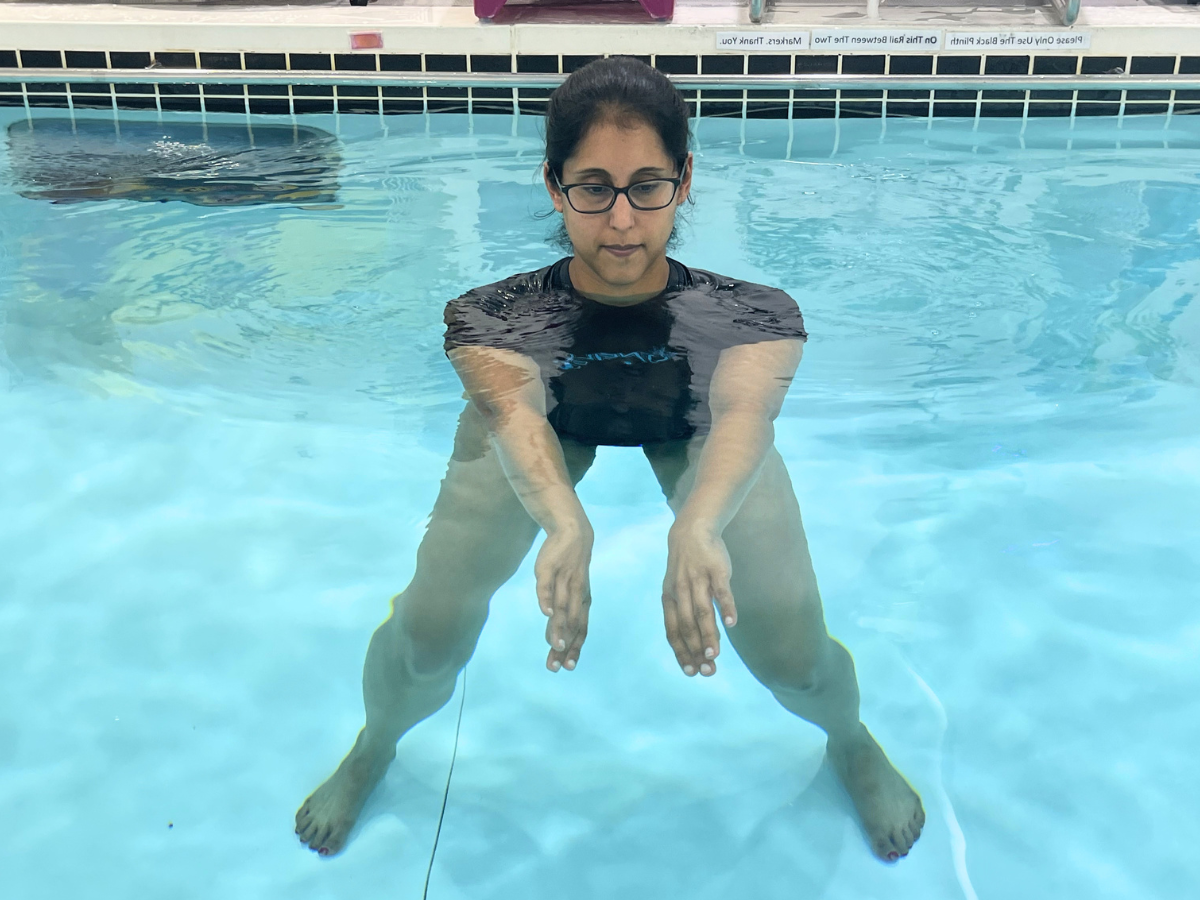
This is often the starting point.
By gently bending your knees and lowering your body into the water, your shoulder goes below the surface. As this happens, the water naturally lifts your arm upwards.
Why this works:
- Takes pressure off the shoulder
- Reduces pain
- Allows movement without forcing it
For many patients, this is the first time they realise: “I can move my arm again.”
2. Pool Bar Assisted Shoulder Flexion
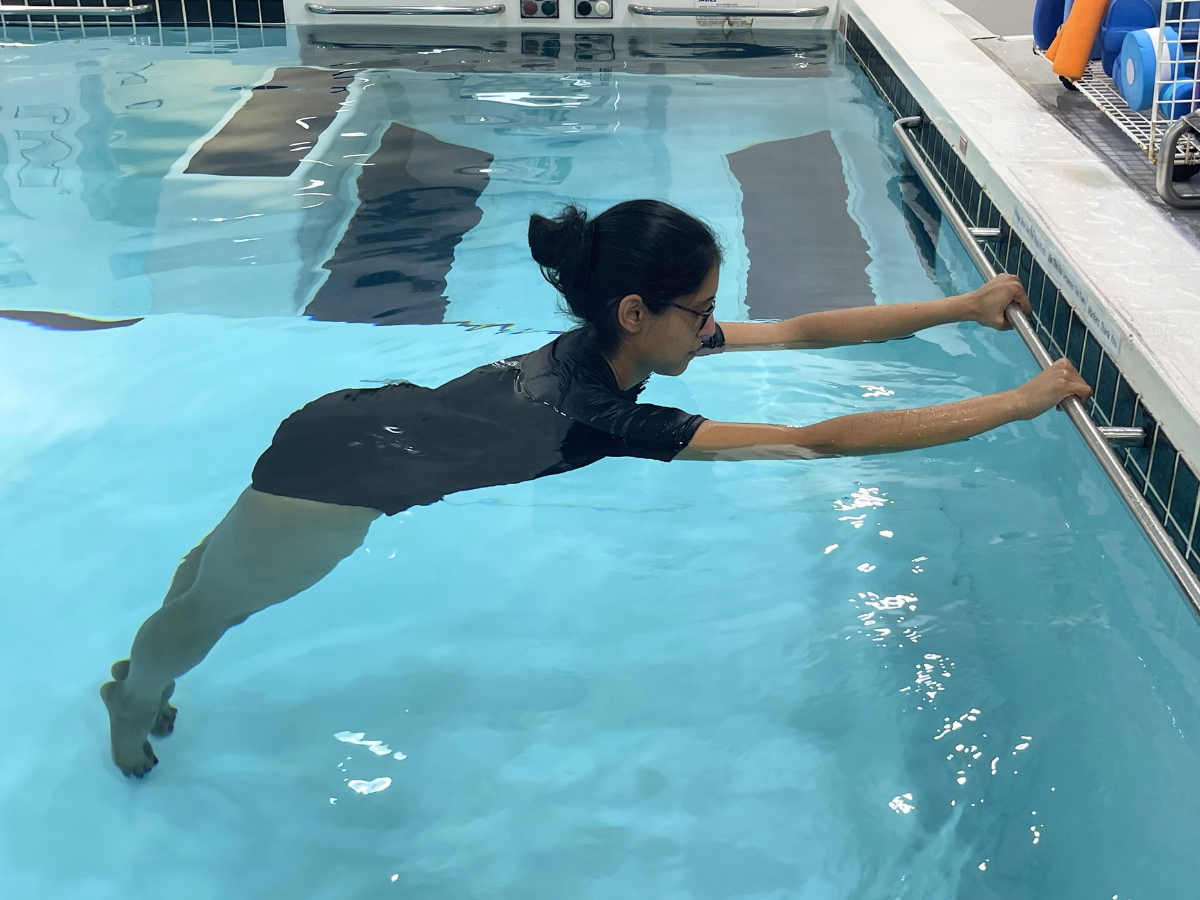
This is often the starting point.
By gently bending your knees and lowering your body into the water, your shoulder goes below the surface. As this happens, the water naturally lifts your arm upwards.
Why this works:
- Takes pressure off the shoulder
- Reduces pain
- Allows movement without forcing it
For many patients, this is the first time they realise: “I can move my arm again.”
3. Buoyancy-Assisted Flexion with Float
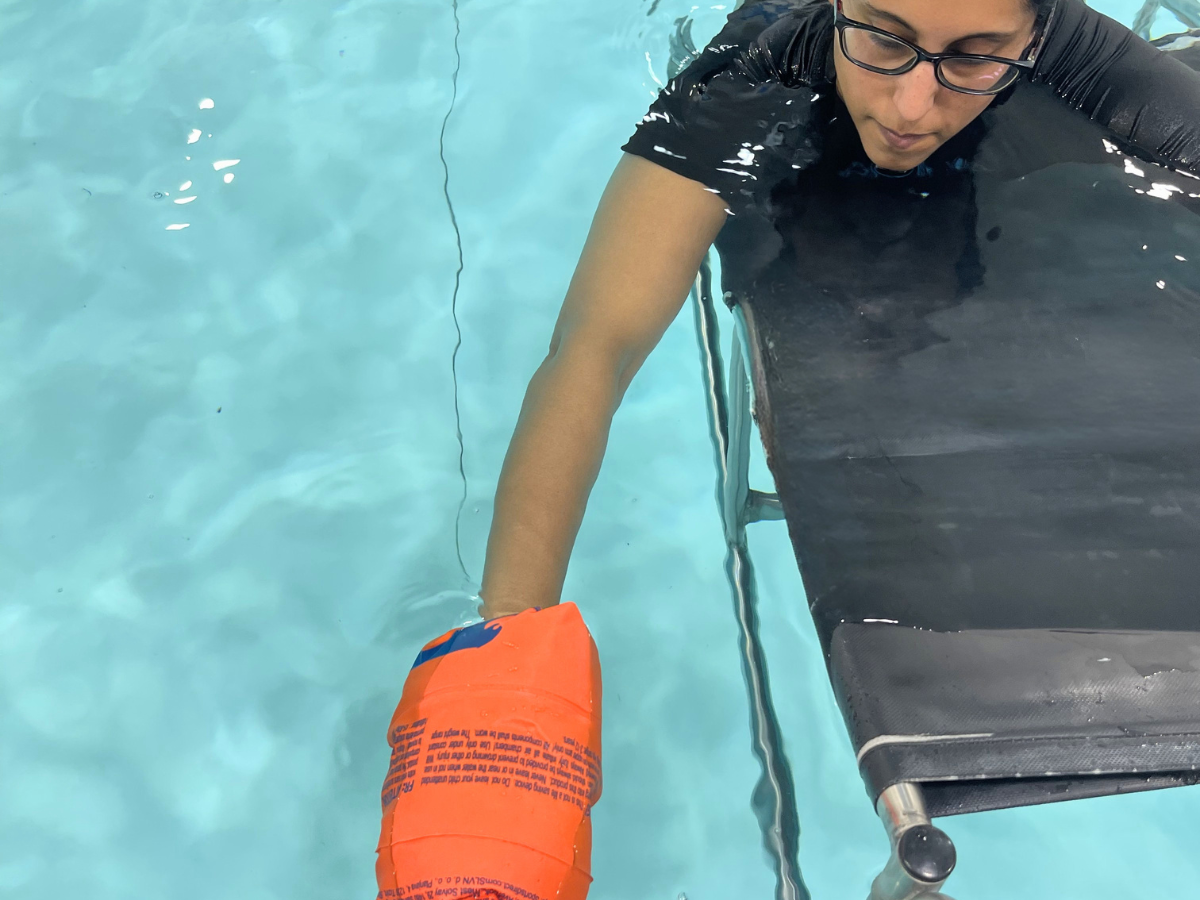
Using a float or buoyancy aid, your arm is gently assisted upwards.
Why this works:
- Reduces muscular effort
- Helps initiate movement
- Ideal in early or painful stages
This is particularly useful if your shoulder still feels weak or guarded.
4. Active Shoulder Flexion in Water
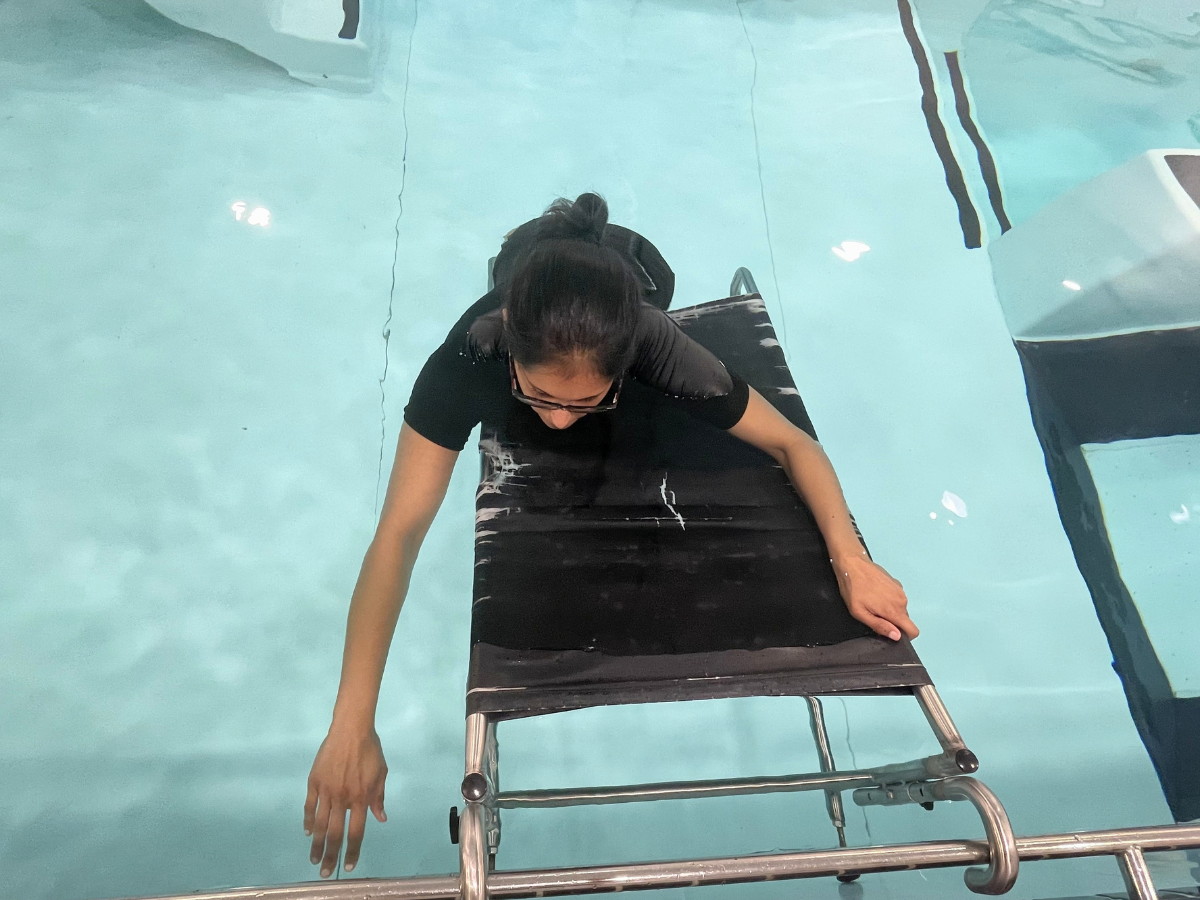
Now we remove the float.
You actively lift your arm but the water still gives you partial support, similar to lying on your back on land.
Why this works:
- Begins strengthening
- Improves muscle activation
- Still keeps movement manageable
This is the bridge between passive movement and strength.
5. Dynamic Shoulder Loading Through Walking
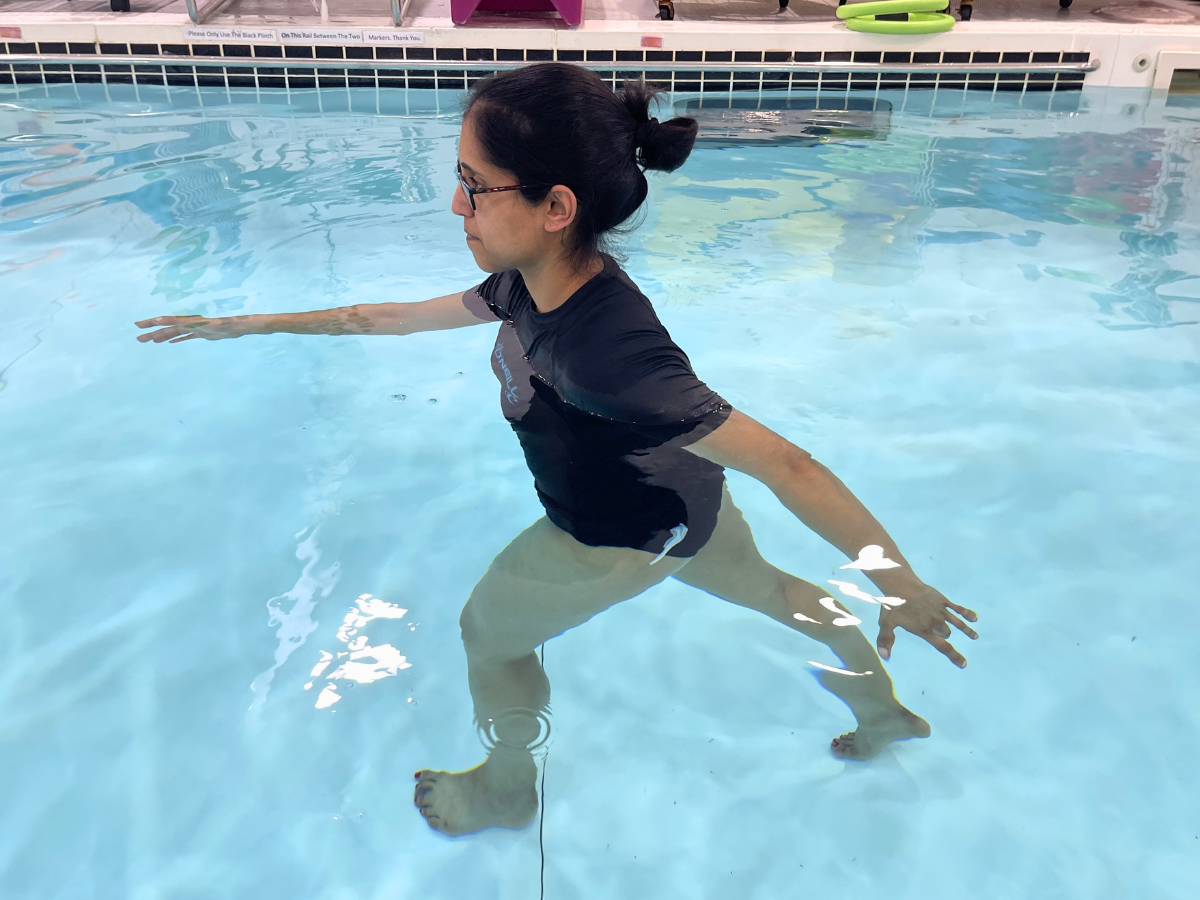
You begin walking through the water, allowing your arms to swing naturally.
Why this works:
- Water resistance adds gentle load
- Movement becomes more functional
- Encourages coordination and rhythm
The faster you walk, the more resistance you create.
This is a simple but powerful way to build strength without overloading the shoulder.
6. AquaStrength Resistance Work
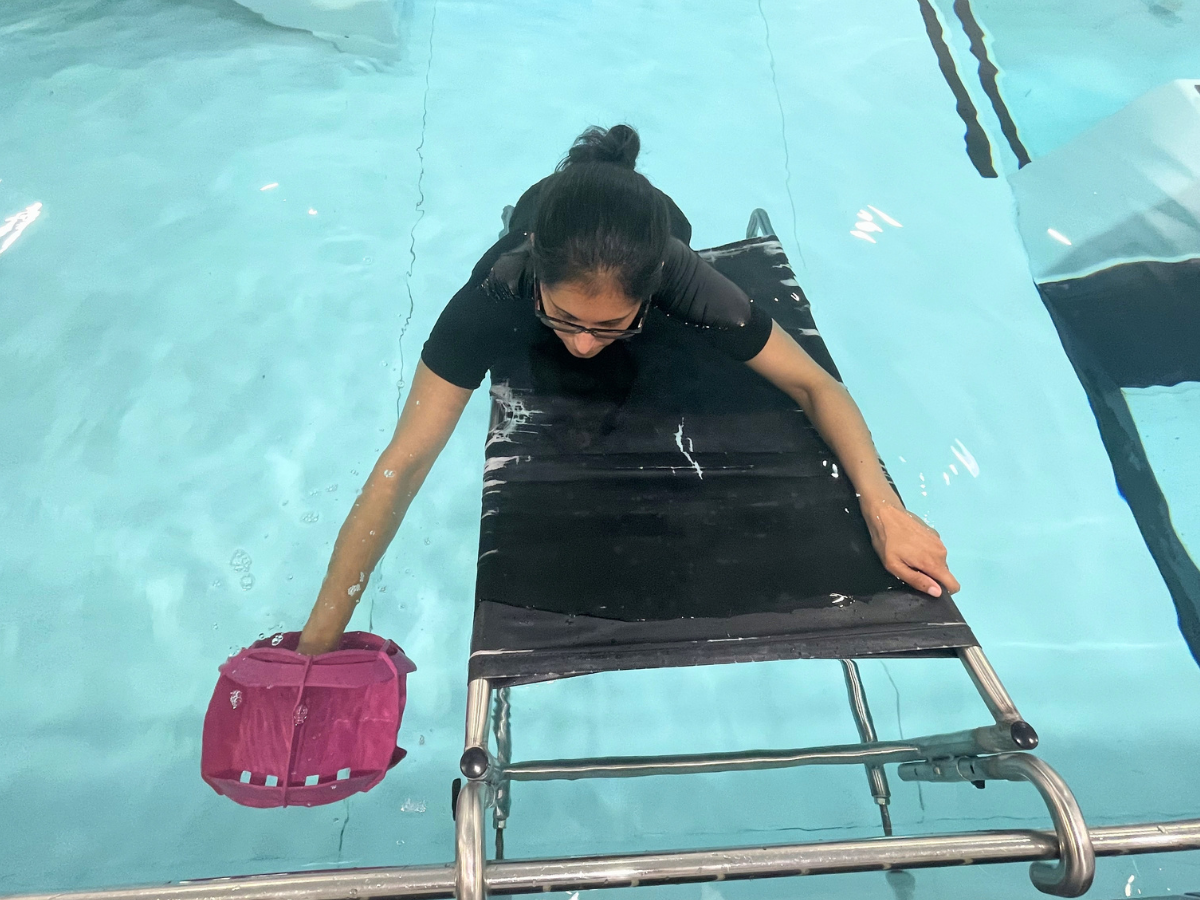
Now we introduce resistance equipment in the water.
Why this works:
- Increases muscle demand
- Builds strength through range
- Improves endurance
At this stage, you’re no longer just restoring movement-you’re rebuilding capability.
7. Proprioception with Aqua Rings
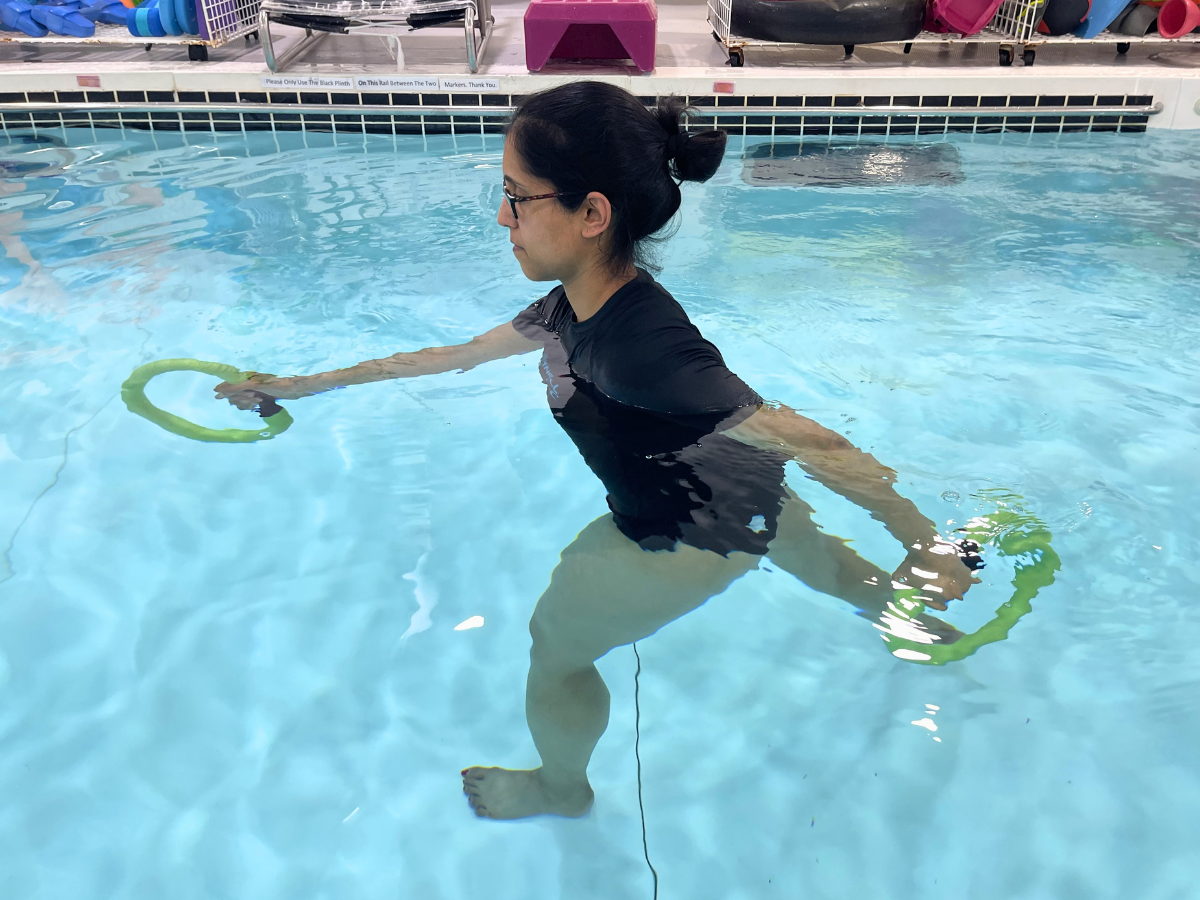
Using equipment with moving elements (like rings with internal balls), we introduce instability.
Why this works:
- Challenges coordination
- Improves joint awareness
- Enhances neuromuscular control
This is key for returning to real-life activities like:
- Reaching overhead
- Lifting
- Sport-specific movement
Why Not Just Do This on Land?
This is a great question.
The reality is:
You can do many of these movements on land but often:
On land:
- Gravity is always pulling your arm down
- Pain is often higher
- Movement feels harder
- Confidence is lower
In water:
- Your arm is supported
- Movement feels smoother
- You can start earlie
- Progression is more controlled
Hydrotherapy acts as a bridge between:
“I can’t move my arm”
“I can use my arm normally again”
Who Is Hydrotherapy Best For?
Hydrotherapy can be particularly helpful if you:
- Have had shoulder surgery (rotator cuff, labrum, etc.)
- Are recovering from frozen shoulder
- Have stiffness after injury
- Feel pain when lifting your arm
- Lack confidence using your shoulder
- Are struggling to progress on land
It’s especially useful in the early to mid-stages of rehab.
What Results Can You Expect?
Every patient is different but commonly we see:
- Improved range of movement
- Reduced pain during movement
- Better muscle activation
- Increased confidence
- Smoother transition to land-based rehab
Most importantly:
Patients feel like they are moving forward again
A Realistic Timeline
Hydrotherapy isn’t a quick fix but it can accelerate the right parts of recovery.
Typical progression might look like:
- Weeks 1–3: Regaining movement with support
- Weeks 3–6: Increasing active control
- Weeks 6+: Building strength and function
This varies depending on your condition but the key is consistent, guided progression.
The Bigger Picture: It’s Not Just the Shoulder
One thing many people don’t realise is:
Recovery isn’t just about the joint it’s also about the brain
After injury:
- The brain becomes protective
- Movement patterns change
- Confidence drops
Hydrotherapy helps retrain:
- Movement patterns
- Coordination
- Confidence in the shoulder
This is why patients often say:
“It just feels more natural in the water.”
FAQ: Your Questions Answered
1. Is hydrotherapy painful?
No-if anything, it usually reduces pain. The buoyancy of the water supports your arm and makes movement easier and the heat dampens down your pain system
2. When can I start hydrotherapy after surgery?
This depends on your surgery and consultant guidance, but many patients can start earlier than they expect, we work with many consultants and we are happy to chat with them about your surgery with your permission.
3. Do I still need physio on land?
Yes. Hydrotherapy complements land rehab it doesn’t replace it. The goal is to transition back to full function on land.
4. How many sessions will I need?
This varies, but many patients benefit from a short block of sessions averaging around 6-8 to restore movement and confidence before progressing.
5. What if I’m not a strong swimmer?
That’s completely fine. Hydrotherapy is done in a controlled environment, often standing, with full support from your physiotherapist.
6. Can hydrotherapy help frozen shoulder?
Yes, hydrotherapy is particularly effective for frozen shoulder because it allows gentle, progressive movement without forcing the joint.
7. Will it actually improve my range?
Yes it should do, especially when movement is limited by pain, stiffness, or lack of confidence. It helps unlock movement earlier.
Final Thoughts
If you’re struggling to lift your arm, you’re not alone and you’re not stuck.
Hydrotherapy offers a way to:
- Start moving again
- Reduce pain
Build confidence
It’s not about forcing movement it’s about reintroducing it in the right environment, at the right time.
And sometimes, that environment is the water.