Rehabilitation following a total knee replacement (TKR) focuses on restoring movement, improving strength, and helping patients regain confidence in their new joint. Aquatic physiotherapy can play a valuable role in this early stage of recovery.
This case study highlights how hydrotherapy helped an 83-year-old gentleman improve his knee movement and muscle activation just a few weeks after surgery.
Initial Presentation
The patient attended AquaPhysio 6 weeks after a left total knee replacement.
At the initial assessment, the main challenge was limited knee extension, which can affect walking mechanics, posture, and overall mobility.
Initial measurements:
- Knee flexion: 100°
- Knee extension: lacking 20°

Improving knee extension was the primary focus of the early rehabilitation sessions.
Hydrotherapy Approach
Aquatic physiotherapy provided a safe environment to begin restoring movement while reducing stress on the joint.
Several techniques were used during the sessions:
1. Buoyancy-Assisted Long Lever Work
The buoyancy of the water helped support the limb while performing long lever movements. This allowed the patient to work towards greater knee extension with reduced joint loading.
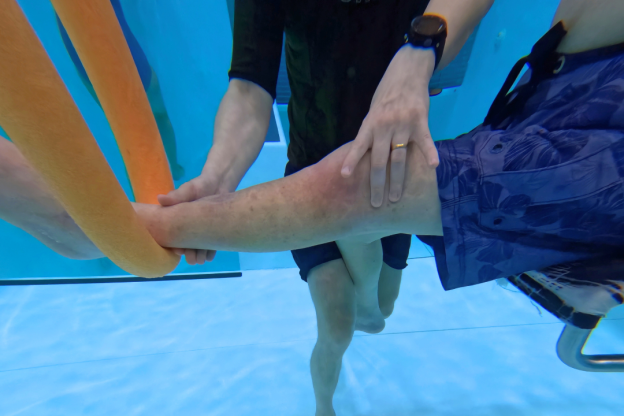
2. Palpable Feedback for Quadriceps Activation
Manual feedback was used to encourage stronger activation of the quadriceps muscle group, which plays a key role in achieving full knee extension.
3. Backwards Walking Walking
Backwards in the pool encouraged activation of the posterior chain, including the glutes and hamstrings, while promoting:
- Ankle dorsiflexion
- Knee extension
- Hip extension
This movement pattern helps restore a more natural walking pattern.

4. Early Flexion and Extension Work
Controlled knee flexion and extension exercises were introduced early, allowing the patient to safely explore a greater range of movement in the supportive aquatic environment.

Functional Benefits of the Water
Hydrotherapy offers several advantages during early rehabilitation:
- Buoyancy reduces body weight through the joint
- Water resistance encourages controlled strengthening
- Warm water can help relax surrounding muscles
- Confidence increases when movement feels safer and more supported
The patient was also able to increase weight bearing through the operated limb, encouraging improved activation of the gluteal muscles and quadriceps.
Results After Three Sessions
After just three hydrotherapy sessions, significant improvements were seen in knee movement.
Progress:
- Knee flexion improved from 100° to 130°
- Knee extension improved from lacking 20° to: 10° active extension and approximately 5° passive extension

These improvements demonstrate how aquatic physiotherapy can support early mobility gains and improved muscle activation following knee replacement surgery.
Supporting Recovery After Knee Replacement
Every patient’s recovery journey is unique, but hydrotherapy can be a powerful tool in helping patients regain movement, strength, and confidence after surgery.
At AquaPhysio, aquatic physiotherapy is often used alongside land-based rehabilitation to help patients progress safely and effectively during the early stages of recovery.