Rehabilitation After Femoral Fracture Fixation: The Role of Hydrotherapy at AquaPhysio

Understanding Femoral Fractures and Fixation
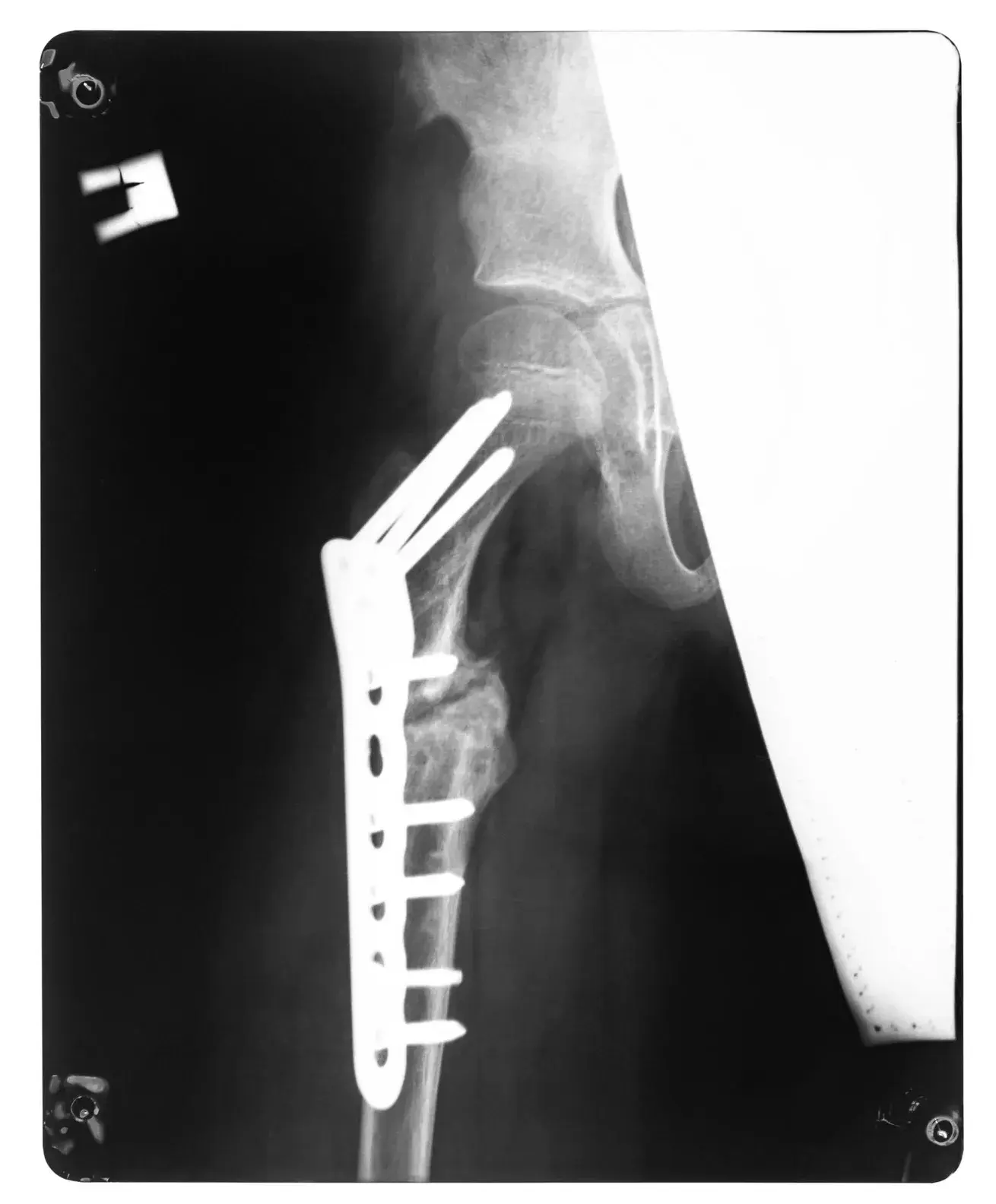
Femoral fractures are a common injury among active individuals, often resulting from high impact falls during running, cycling or skiing. These fractures typically require surgical intervention in the form of Open Reduction Internal Fixation (ORIF) to stabilise the bone and allow for proper healing.
Following surgery, rehabilitation is crucial for restoring function and facilitating a return to sport or daily activities. The recovery timeline varies based on the severity of the fracture, surgical fixation, and individual healing response.
Typical post-operative weight-bearing progression
- Weeks 0-2: Non-weight bearing (NWB)
- Weeks 3-6: Transitioning to partial weight-bearing (PWB) or toe-touch weight-bearing (TWB), usually around 20% of body weight.
- Weeks 7 and beyond: Gradual weaning off crutches and progressive loading.
The benefits of Hydrotherapy at AquaPhysio in Femoral Fracture rehabilitation
AquaPhysio offers specialised hydrotherapy services for patients recovering from femoral fractures, providing a safe and controlled environment to regain strength, mobility, and confidence. The buoyancy of water reduces joint stress while still enabling movement against resistance, helping to minimise muscle atrophy and promote neuromuscular control.
Hydrotherapy treatment plan at AquaPhysio
Deep Water exercises (non-weight bearing phase 0-2 Weeks)
- Marching (low knees): Encourages weight transfer and improves circulation.
- Calf Raises: Activates the posterior chain muscles safely.
- Bilateral Hip Abduction (small range): Engages abductors with minimal resistance.
- Straight Knee Cross-Training (slow, small range) – Maintains lower limb muscle activation.
- Very low-level cycling (slow pace): Encourages controlled lower limb movement.
Exercises in the Deep Well (Weeks 3-6, transitioning weight-bearing phase)
- Knee Flexion/Extension (slow, water resistance only): Improves quadriceps and hamstring control.
- Hip Abduction (supine position): Focuses on range of motion without excessive load.
- Hip Flexor Stretch (prone position): Prevents contractures and maintains mobility.
Addressing Muscle Atrophy and strength deficits
Since weight-bearing restrictions limit direct lower limb strengthening, maintaining activation of key muscle groups is essential:
- Quadriceps, Hamstrings, Glutes, and Calves: Engaged through controlled water-based movements.
- Hip Flexors and Abductors: Maintained through non-weight-bearing exercises.
- Core Stabilisation: Focus on trunk control to support lower limb rehabilitation.
Why choose AquaPhysio for Femoral Fracture rehabilitation?
AquaPhysio provides expert-led hydrotherapy sessions designed to support recovery from femoral fractures. Our state-of-the-art facilities and personalised treatment plans ensure that you receive the best care tailored to your specific rehabilitation needs. The controlled aquatic environment helps reduce pain, improve mobility, and accelerate recovery, making it an ideal choice for post-surgical rehabilitation.
Progressing towards return to sport
As weight-bearing capacity increases, the transition to land-based rehabilitation becomes essential. Hydrotherapy at AquaPhysio complements this by preparing the muscles and joints for higher-impact activities. Functional exercises like controlled squats, step-ups, and dynamic balance work can then be introduced in both water and land settings.
Conclusion
For sporty individuals, recovering from femoral fractures with ORIF, hydrotherapy at AquaPhysio provides an accelerated pathway to regaining strength, mobility, and confidence. By carefully structuring rehabilitation around the principles of weight-bearing progression and muscle activation, patients can safely transition back to their chosen sport with reduced risk of complications.