Case study: ACL and LCL rehabilitation

Background
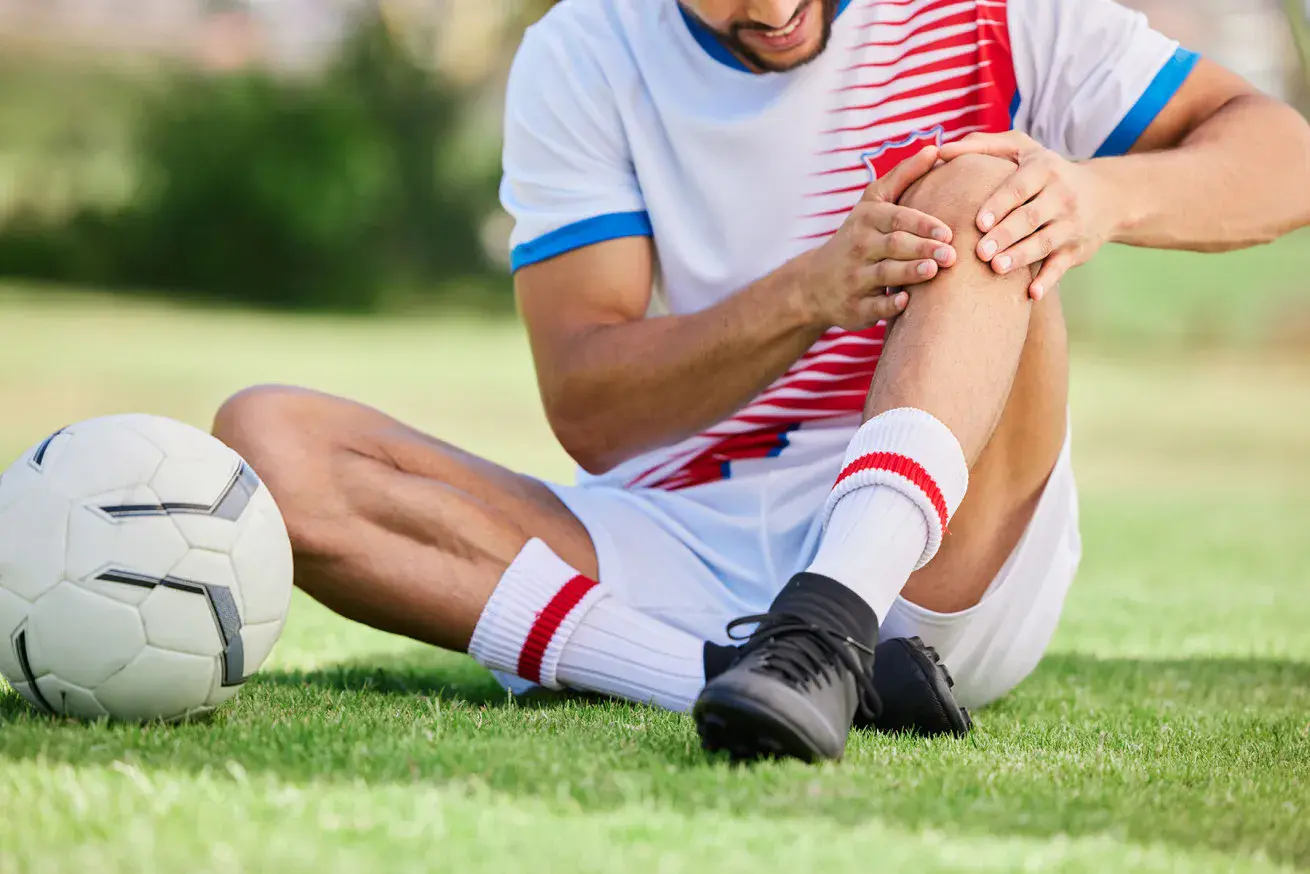
LW, a 20-year-old footballer, sustained a traumatic injury during a football match when he was tackled and landed awkwardly on his left knee. He was taken to A&E, where an X-ray revealed an avulsion fracture of the head of the fibula. Further imaging with an MRI confirmed a more complex injury, including a complete rupture of the anterior cruciate ligament (ACL) and lateral collateral ligament (LCL), as well as ruptures of the biceps femoris tendon (part of the hamstrings) and the popliteus tendon.
Surgical and Rehabilitation Timeline
LW underwent surgery to repair his LCL one-month post-injury. Following this, he commenced his hydrotherapy rehabilitation program one month after the operation. The second operation to reconstruct his ACL using a hamstring graft took place later, and he returned to hydrotherapy four weeks post-surgery.
Aquatic Physiotherapy Approach
Phase 1: Post-LCL Repair Rehabilitation
Upon beginning aquatic physiotherapy, LW was comprehensively assessed by one of our physios. The initial focus was on:
- Gait Re-Education: Teaching proper weight distribution and improving his walking pattern.
- Weight Transfer Exercises: Aiding neuromuscular control and proprioception.
- Strength Training: Activating key muscle groups including the quadriceps, hamstrings, and glutes.
- Aquatic Running and Stretching Exercises: To maintain cardiovascular fitness while minimising joint stress.
LW made excellent progress in the hydrotherapy sessions, regaining full range of motion in his knee and significant improvements in strength. By the end of this phase, he was walking unaided without a limp.
Phase 2: Post-ACL Reconstruction Rehabilitation
Four weeks post-ACL surgery, LW was re-assessed. At this stage, he was walking on land without crutches but exhibited a noticeable limp. He demonstrated:
- Reduced active knee range of motion.
- Poor quadriceps strength and control.
- Considerable anterior knee swelling.
His rehabilitation plan was adjusted accordingly, focusing on:
- Quadriceps and Gluteal Strengthening: Essential for stabilising the knee and ensuring proper joint function.
- Active Range of Motion Exercises: Improving knee flexion and extension.
- Gait Patterning: Correcting his walking technique to eliminate his limp.
Remarkably, after just six weeks post-surgery, LW had achieved sufficient quadriceps control to initiate deep-water running. This allowed him to begin cardiovascular conditioning much earlier than land-based protocols typically permit.
Outcomes and Progression
After only three sessions in the pool:
- LW developed adequate quadriceps control for open-chain exercises and aquatic running.
- His knee range of motion improved significantly, reaching 0°-130°.
- He was walking on land without a limp.
His aqua-based program will continue alongside his land-based rehabilitation, following ACL recovery protocols. The use of hydrotherapy provides unique advantages, such as reduced joint impact, early gait training, and accelerated cardiovascular conditioning.
Conclusion
LW’s rehabilitation highlights the effectiveness of integrating hydrotherapy into ACL and multi-ligament injury recovery. By utilising the buoyancy and resistance properties of water, he has been able to progress more rapidly than with land-based rehab alone. Ongoing treatment will focus on rebuilding his strength and fitness to ensure a safe and full return to football.